Developing mathematical skills during childhood helps children understand numbers, solve problems and approach learning with confidence. However, some children find it difficult to perform calculations mentally or remember multiple steps while solving problems. Abacus learning offers an interactive approach that makes mathematics easier to explore through visual practice and regular exercises. Along with supporting brain development classes for kids, this learning method encourages children to improve their numerical understanding, concentration and problem solving abilities. Let’s explore how abacus practice can make a difference in children’s mathematical learning.
1. Helps Children Understand Numbers Visually
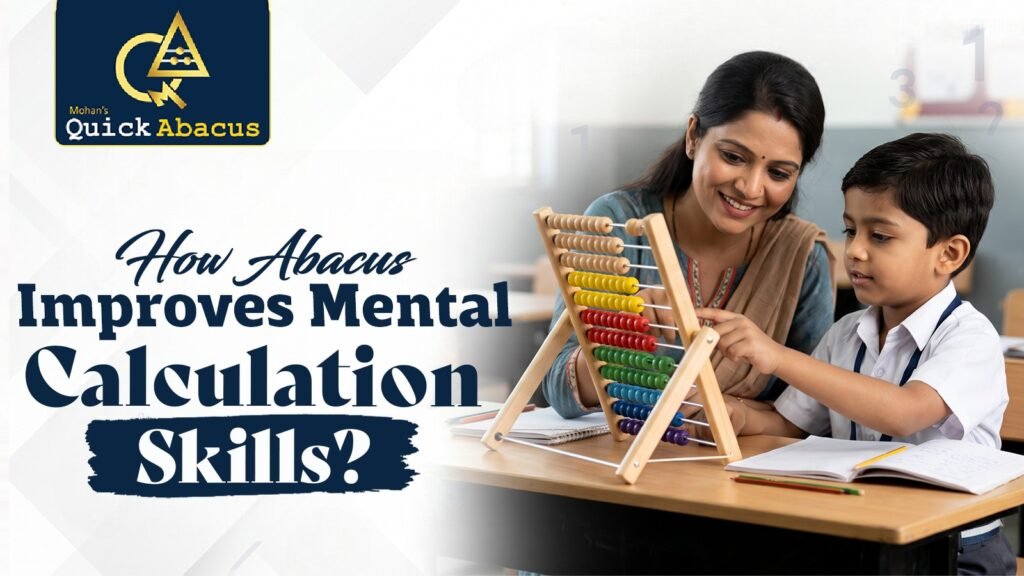
An abacus is a traditional mathematical tool that uses beads arranged on rods to represent numbers. Children learn to perform calculations by moving the beads according to different numerical values. This hands on approach helps them understand how numbers work instead of simply memorising calculation methods.
As children practise addition, subtraction and other mathematical operations, they become familiar with number combinations and place values. The visual representation makes mathematical concepts easier to understand, particularly for beginners who are developing their basic numerical skills.
2. Develops the Ability to Calculate Mentally
One of the most interesting aspects of abacus learning is the gradual transition from physical bead movements to mental calculations. Initially, children use an actual abacus to solve problems. With consistent practice, they begin visualising the beads in their minds and performing calculations without the physical tool.
This approach encourages children to remember numerical patterns and follow calculation steps independently. Enrolling in structured mental math classes can further support their learning by introducing regular exercises that improve calculation speed, accuracy and confidence.
3. Improves Concentration and Memory
Abacus practice requires children to observe numbers, remember bead positions and follow calculation steps carefully. These activities encourage them to pay attention and stay focused while solving mathematical problems.
Some important skills children can practise through abacus learning include:
- Concentration: Following calculation steps without losing focus.
- Visualisation: Imagining bead movements while solving problems.
- Memory: Remembering number combinations and calculation patterns.
- Logical Thinking: Understanding numerical relationships and finding suitable solutions.
These activities can complement kids brain development classes by providing opportunities to practise observation, memory and logical reasoning through engaging exercises.
4. Makes Mathematics More Interesting Through Practice
Children often develop a better understanding of mathematics when they learn through activities rather than relying entirely on written exercises. Abacus sessions introduce number challenges, timed exercises and progressive calculation activities that make regular practice more engaging.
Parents can also explore Vedic maths classes to introduce different calculation methods and interesting mathematical shortcuts. Learning alternative approaches gives children an opportunity to understand how the same problem can be solved in different ways.
Combining practical exercises with guided learning can help children develop a more positive attitude towards mathematics.
5. Builds Confidence in Solving Mathematical Problems
When children practise calculations regularly, they become more familiar with different types of mathematical questions. Successfully solving problems can motivate them to participate in classroom activities and approach challenging questions with greater confidence.
Abacus learning focuses on gradual improvement rather than expecting children to master every calculation immediately. Starting with simple exercises and progressing towards advanced problems allows them to develop their abilities at a comfortable pace.
Along with kids brain development classes, interactive mathematical activities can give children more opportunities to practise independent thinking and develop confidence in their abilities.
6. Supports Overall Learning and Skill Development
Mental calculation involves more than arriving at the correct answer. Children also learn to follow instructions, recognise number patterns and approach problems systematically.
Parents can encourage these abilities through puzzles, number games, memory exercises and regular calculation practice. Participating in mental math classes can provide additional guidance through structured activities suited to different learning levels.
At Quick Abacus, children get opportunities to explore mathematics through guided abacus practice and interactive learning. Choosing suitable activities based on a child’s age and understanding can make the learning process more comfortable and meaningful.
Making Mental Mathematics a Daily Habit
Abacus learning offers children an engaging way to understand numbers and develop mental calculation skills. Through visualisation, consistent exercises and step-by-step practice, children can gradually become more comfortable with arithmetic.
Parents interested in brain development classes for kids can explore programmes that encourage mathematical learning and logical thinking. Quick Abacus provides learning opportunities for children interested in improving their calculation abilities through structured practice and engaging activities.
Help your child build confidence in mathematics with engaging abacus learning at Quick Abacus.
“Every calculation begins with a number, but every confident learner begins with practice”.