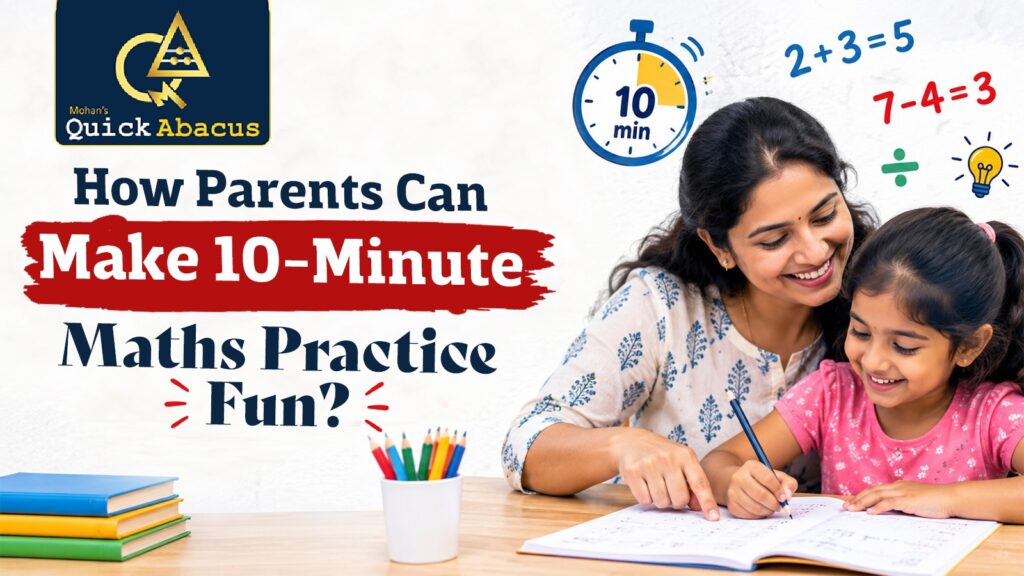
Maths practice does not always need to involve long study sessions or complicated worksheets. Just 10 minutes of focused practice each day can become a simple and enjoyable learning habit. Parents can turn everyday moments into opportunities to explore numbers, patterns and quick calculations. The right activities can help children learn consistently without making practice feel like a routine task.
Start With Simple Number Games
A short maths session becomes more enjoyable when children can participate instead of simply answering questions. Parents can try quick number challenges, mental puzzles or counting games that match their child’s level. Activities inspired by abacus and vedic maths training can also introduce calculation in an interactive way.
Turn Everyday Activities into Maths
Parents do not need special materials for every practice session. Counting fruits, comparing prices, measuring ingredients or adding scores during a game can turn ordinary moments into maths practice. An experienced abacus trainer can also guide parents on age-appropriate exercises that complement structured learning.
Keep the Ten Minutes Interesting
Children are more likely to practise regularly when activities feel varied and enjoyable. Parents can change the activity each day instead of repeating the same worksheet. This approach creates fun and engaging learning for kids while keeping their curiosity alive.
Easy Ways to Make Practice Fun
Try mixing different activities during the week:
- Quick mental calculation challenges
- Number guessing games
- Simple addition races
- Memory-based number games
- Every day counting activities
- Short calculation puzzles
Using proven math learning techniques can help parents make these activities more purposeful while keeping the practice short and manageable.
How Quick Abacus Helps Parents?
Quick Abacus provides structured learning activities that can support a child’s regular maths practice at home. Parents can reinforce concepts through short exercises and encourage children to apply their skills beyond the learning session. The focus on progressive practice makes it easier to build a consistent routine without overwhelming the child.
Build Speed through Short Practice
Ten minutes of focused practice can gradually help children become more comfortable with numbers and calculations. Regular mental math classes for faster calculation can complement home practice by introducing children to structured exercises that develop speed and accuracy over time.
Conclusion
Making maths enjoyable does not require elaborate activities or hours of practice. Abacus classes for school children can provide a strong foundation, while parents can support learning with simple ten-minute activities that make numbers part of everyday life.
Give your child a simple and enjoyable way to build confidence with numbers through Quick Abacus.
“When maths becomes a game, practice can become something children look forward to.”