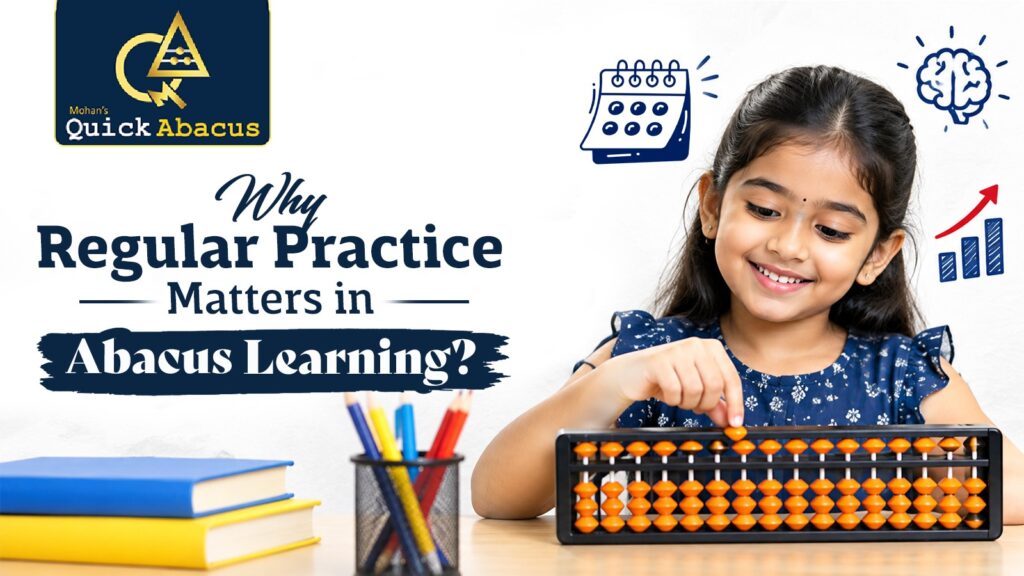
Regular practice helps children turn abacus techniques into natural calculation habits. Repeating simple exercises improves familiarity with numbers, patterns and calculation methods. Consistent learning can gradually improve speed, accuracy, concentration and confidence. The key is not practising for long hours but creating a steady and enjoyable learning routine.
Why Practice Is Important in Abacus Learning?
Abacus learning involves developing new ways of understanding and processing numbers. Children need repeated opportunities to practise bead movements, number combinations and calculations before these skills become comfortable. Abacus and vedic maths training can provide a structured approach where regular practice helps children gradually strengthen their calculation abilities.
Small Practice Sessions Can Make a Difference
Children do not necessarily need lengthy practice sessions to make progress. Short, consistent activities can help them remember concepts and apply what they have learned. Guidance from an experienced abacus trainer can also help children identify mistakes, improve techniques and progress according to their learning level.
Making Practice Enjoyable
Practice becomes easier to maintain when children look forward to each session. Number games, challenges and interactive activities can reduce the feeling of repetition while encouraging children to participate actively. Fun and engaging learning for kids can help create a positive attitude towards regular mathematical practice.
What Regular Practice Can Build?
Consistent abacus practice can help children develop several useful learning skills:
- Better concentration
- Improved calculation accuracy
- Faster number recognition
- Stronger memory
- Greater confidence
- More consistent performance
Using proven math learning techniques can make practice more purposeful by helping children build skills step by step instead of simply repeating calculations without understanding them.
How Quick Abacus Supports Regular Practice?
Quick Abacus encourages children to build a consistent learning routine through structured activities and progressive exercises. The learning process gives children opportunities to revisit concepts, practise calculations and gradually take on more challenging tasks. This regular exposure helps make calculation techniques easier to recall and apply.
Practice and Mental Calculation Speed
As children practise frequently, they can become more comfortable processing numbers without relying heavily on written steps. Regular mental math classes for faster calculation can strengthen this ability by giving children repeated opportunities to apply their skills with increasing speed and accuracy.
Conclusion
Regular practice is one of the most important parts of successful abacus learning. Abacus classes for school children can help children develop a steady learning habit while strengthening calculation, concentration and confidence through consistent practice.
Explore Quick Abacus and give your child a positive environment to learn, practise and grow with numbers.
“Small steps repeated consistently can turn difficult calculations into familiar skills”.