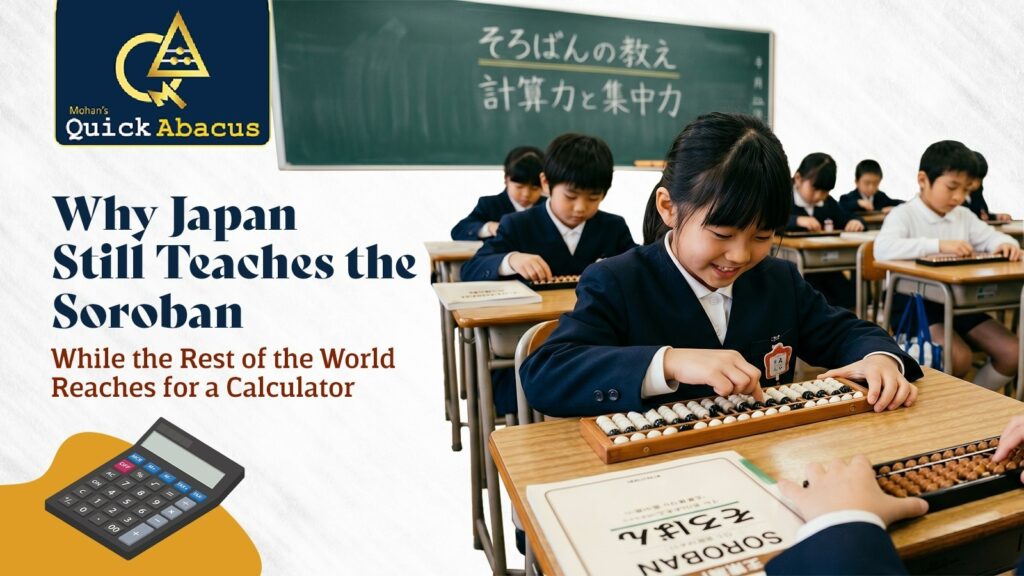
In an age where calculators and smartphones can solve complex calculations instantly, Japan continues to teach the Soroban, the traditional Japanese abacus, in schools and learning centers. While technology has changed the way people calculate, the Soroban remains valued for its ability to develop essential thinking skills that go far beyond mathematics.
More Than a Calculating Tool
The Soroban is not simply used for finding answers. It helps children visualize numbers, improve concentration, and perform mental calculations with greater speed and accuracy. Regular practice encourages the brain to process numbers more efficiently, strengthening both analytical and creative thinking.
This is one reason why many parents are enrolling children in abacus training programs that focus on cognitive development as well as mathematical skills.
Building Mental Calculation Skills
Unlike calculators, which provide instant answers, the Soroban encourages children to understand how numbers work. Over time, students learn to perform calculations mentally by visualizing the movement of beads, a technique often known as mental arithmetic.
This process improves memory, focus, and confidence while making mathematics more engaging for young learners
Why the Method Still Works Today
Even in a technology-driven world, strong mental skills remain valuable. Learning through a structured abacus learning program helps children improve concentration, observation, and problem-solving abilities that can benefit them in academics and everyday life.
Many educators believe that developing these foundational skills early creates long-term advantages in learning and decision-making.
The Quick Abacus Advantage
At Quick Abacus, students are introduced to proven learning methods that make mathematics enjoyable and interactive. The goal is not just faster calculations but stronger thinking abilities that support overall academic growth.
Conclusion
Japan’s continued focus on the Soroban highlights the importance of developing the mind rather than relying entirely on technology. While calculators provide answers, abacus training helps children build the skills needed to think independently and confidently.
Help your child strengthen concentration, memory, and mental math skills with engaging learning programs at Quick Abacus.
A calculator gives answers, but an abacus helps build the mind behind them.