Introducing young minds to numbers during their most formative years sets an incredibly strong foundation for future academic success. Many parents wonder if introducing a preschooler to mental math tools is a step too far, or if it accelerates natural growth. The early years are exactly when cognitive abilities expand at an exceptional, rapid rate through play and structured exploration. Understanding your child’s developmental readiness is the ultimate key to making this early start a joyful, rewarding journey rather than a stressful task.
Understanding the Early Cognitive Window
Between the ages of 3 and 5, a child’s brain forms connections at a remarkable speed, acting like a literal sponge for visual and tactile information. This critical milestone marks the perfect opportunity for kids brain development classes to make a permanent, positive impact on their foundational learning capacities. However, introducing structured tools requires careful observation to ensure your toddler is genuinely prepared for formal training.
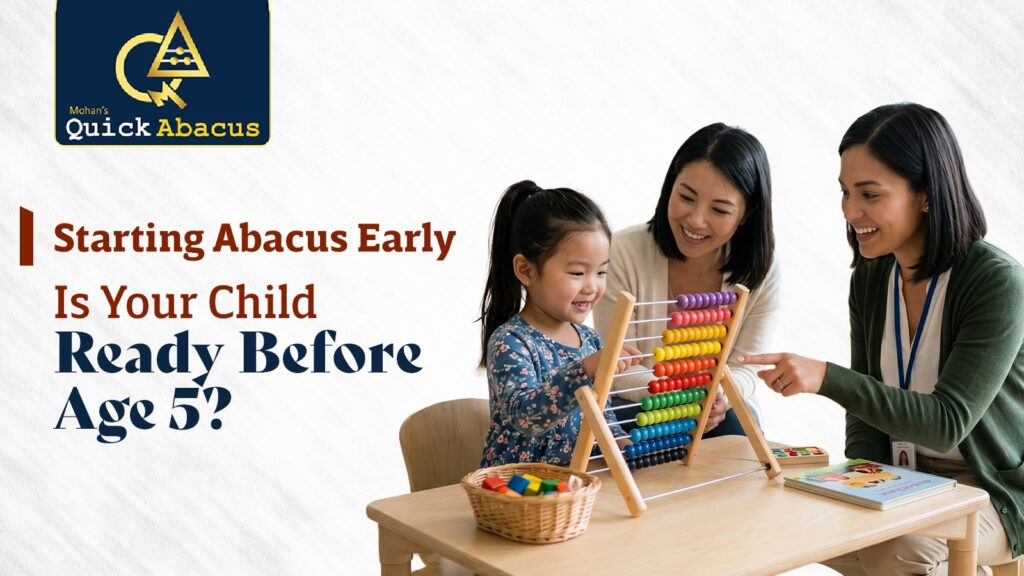
Enrolling young learners in structured abacus classes at the right time ensures they learn numbers as physical objects rather than stressful, abstract concepts on paper. When introduced correctly, it transforms basic math into an interactive game that builds immense confidence from the ground up.
Key Signs of Preschool Readiness
Before taking the leap, look for specific behavioral indicators that suggest your child is ready to engage with a counting frame:
- Basic Number Concepts: Your child can confidently count from 1 to 10 and demonstrates a natural curiosity about counting everyday objects like toys or fruits.
- Fine Motor Coordination: They easily manipulate small objects, string beads, or build with blocks, which is essential for sliding beads on a calculation tool.
- Focused Engagement: They possess the ability to settle down and focus on a single interactive activity, like a puzzle or coloring book, for 10 to 15 minutes.
- Pattern Recognition: They genuinely enjoy sorting their playthings by color, shape, or size, showing early signs of logical, analytical thinking.
Choosing the Ideal Path for Growth
If your little one exhibits these signs, exploring structured abacus training for kids can be a fantastic way to boost their natural spatial awareness and photographic memory. The primary goal at this tender age is not to force complex equations, but to strengthen focus, visualization skills, and mental agility. Selecting the best abacus classes ensures that your child steps into a playful, nurturing environment tailored precisely to their specific age group and learning pace.
Conclusion
Starting early grants young learners a massive cognitive advantage, shaping their attitude toward mathematics for years to come. While not every child is fully prepared before turning five, those who exhibit readiness can benefit immensely from a structured, fun-filled curriculum that builds lifelong mental discipline.
Ready to build your child’s math confidence from the very start? Contact Quick Abacus today to book a free trial class and give your little one a head start in cognitive development!
Children do not hate math. They hate being confused, intimidated, and bored by it. Introduce it with joy, and they will embrace it