
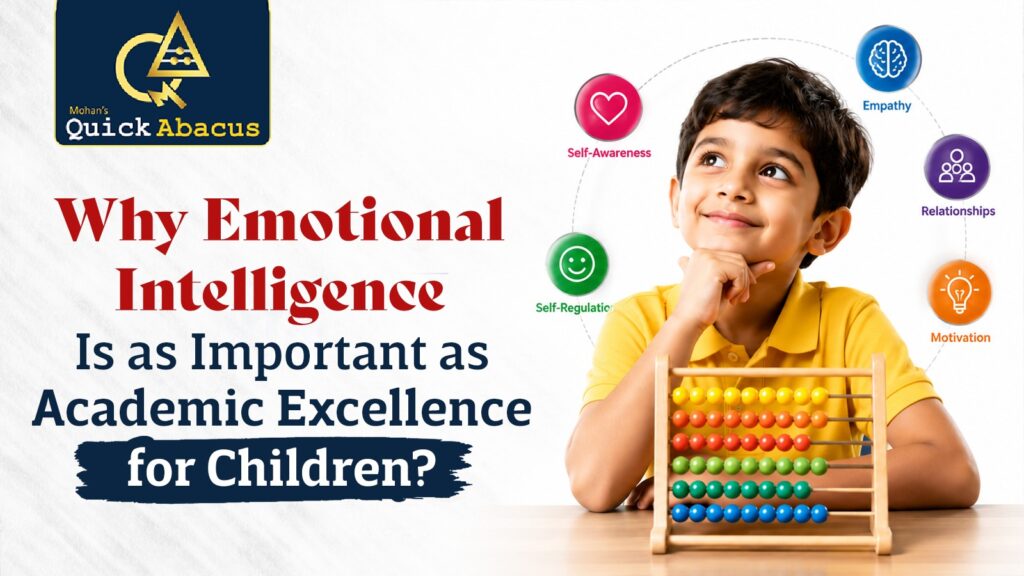
Academic success is important, but a child’s ability to understand and manage emotions is equally valuable for long-term growth. Emotional intelligence helps children build confidence, develop healthy relationships, and respond positively to challenges. When emotional skills are nurtured alongside cognitive development, children become more resilient learners and responsible individuals. A balanced approach to education prepares them not only for exams but also for life.
Understanding the Importance of Emotional Intelligence
Emotional intelligence enables children to recognize their feelings, communicate effectively, and make thoughtful decisions. These abilities help them remain calm during stressful situations, work better with others, and overcome setbacks with confidence. Along with brain development training for kids, children develop stronger focus, self-awareness, and decision-making skills that contribute to their overall development.
How Skill-Based Learning Supports Emotional Growth
Learning environments that encourage participation and independent thinking help children become emotionally stronger. Activities that require concentration, patience, and consistent practice teach children the value of perseverance while improving their confidence. Through abacus classes, students gradually develop discipline, resilience, and a positive attitude toward learning.
Benefits of Emotional Intelligence for Children
- Builds confidence and self-esteem.
- Improves communication and social skills.
- Helps children manage stress and emotions effectively.
- Encourages better decision-making and problem-solving.
- Develops resilience in challenging situations.
- Promotes positive learning habits and teamwork.
Students enrolled in mental math classes for faster calculation also learn to stay focused under pressure, improving both their mathematical abilities and emotional control during challenging tasks.
Building a Strong Future through Balanced Learning
A child’s overall success depends on more than academic scores. Programs that combine cognitive development with practical learning encourage children to think independently and approach challenges with confidence. Parents looking for the best abacus classes often choose learning environments that nurture both intellectual abilities and emotional well-being. At Quick Abacus, children are encouraged to develop lifelong skills that support success in academics, relationships, and everyday life.
Conclusion
Children thrive when education focuses on both emotional intelligence and academic excellence. Developing confidence, empathy, resilience, and critical thinking from an early age helps them become capable individuals who are prepared for future opportunities and challenges.
Help your child grow with confidence through Quick Abacus. Enroll today and support their journey toward stronger thinking, emotional balance, and lifelong success.
A child’s greatest achievement is not just learning to solve problems, but learning to face them with confidence and resilience