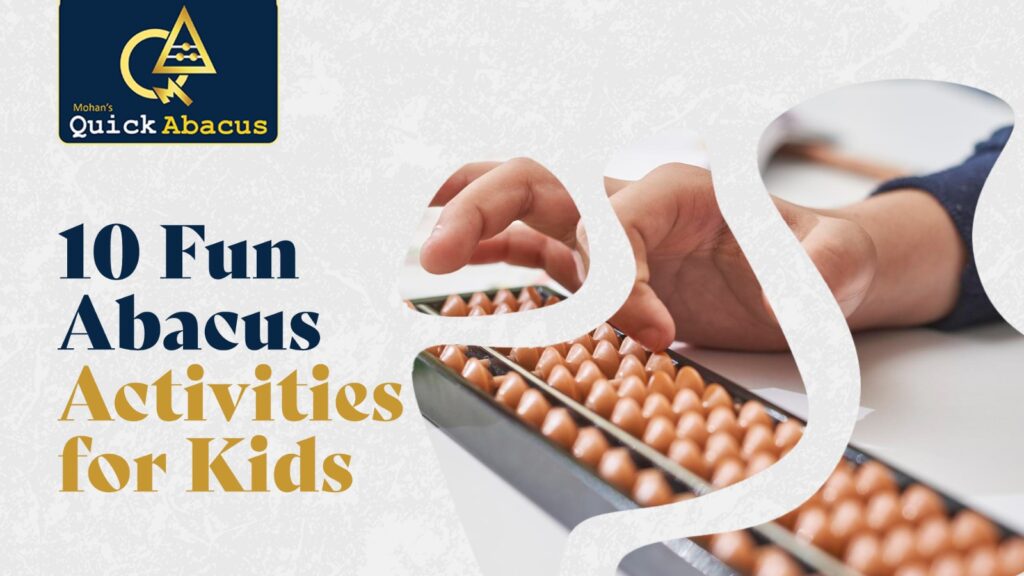
Learning mathematics doesn’t have to be boring, especially when it’s taught in a fun and engaging way. At Quikabacus, children discover the joy of numbers through interactive techniques that make learning both effective and enjoyable. With the help of Quick Abacus methods, kids can develop strong numerical skills while having fun. Let’s explore some exciting activities that make Abacus Learning an enjoyable journey for young learners.
Why Fun Activities Matter in Abacus Learning
Kids understand concepts more effectively when they actively participate in the learning process. Combining games and exercises with Abacus Training helps improve focus, creativity, and problem-solving skills. It also strengthens Mental math abilities, making calculations faster and more accurate.
10 Fun Abacus Activities for Kids
- Number Recognition Games
Start with simple activities where kids identify numbers using the abacus. This builds a strong base for Mathematics learning.
- Bead Counting Races
Turn counting into a competition. Kids can race to solve problems using beads, improving speed and accuracy in Mental math.
- Flashcard Challenges
Use flashcards along with the abacus to solve quick problems. This enhances Mental strength and quick thinking.
- Story-Based Calculations
Create simple stories that involve numbers. This method connects Maths Learning with real-life situations, making it more relatable.
- Memory Games with Abacus
Show a number briefly and ask kids to recreate it on the abacus. This strengthens memory and supports Vedic math learning techniques.
- Reverse Counting Practice
Encourage kids to count backward using the abacus. This improves concentration and overall Abacus Learning skills.
- Group Learning Activities
Children can solve problems in teams, making Abacus Training more interactive and fun.
- Speed Calculation Drills
Timed exercises help kids improve their calculation speed and build confidence in Mental math.
- Visualization Exercises
Ask kids to imagine the abacus and solve problems mentally. This is a key part of Vedic maths and boosts brain power.
- Daily Practice Challenges
Small daily challenges help maintain consistency and improve overall Mathematics learning over time.
Benefits of These Activities
Incorporating fun activities into learning offers multiple benefits:
- Improves concentration and focus
- Enhances problem-solving skills
- Builds confidence in handling numbers
- Strengthens memory and analytical thinking
- Encourages a positive attitude towards learning
Conclusion
Making learning fun is the key to long-term success in mathematics. With engaging activities and structured guidance, children can develop strong numerical abilities while enjoying the process. Quikabacus combines creativity and proven techniques to make Abacus Learning both effective and exciting.